How Much Does a Private Tutor Cost in 2026?
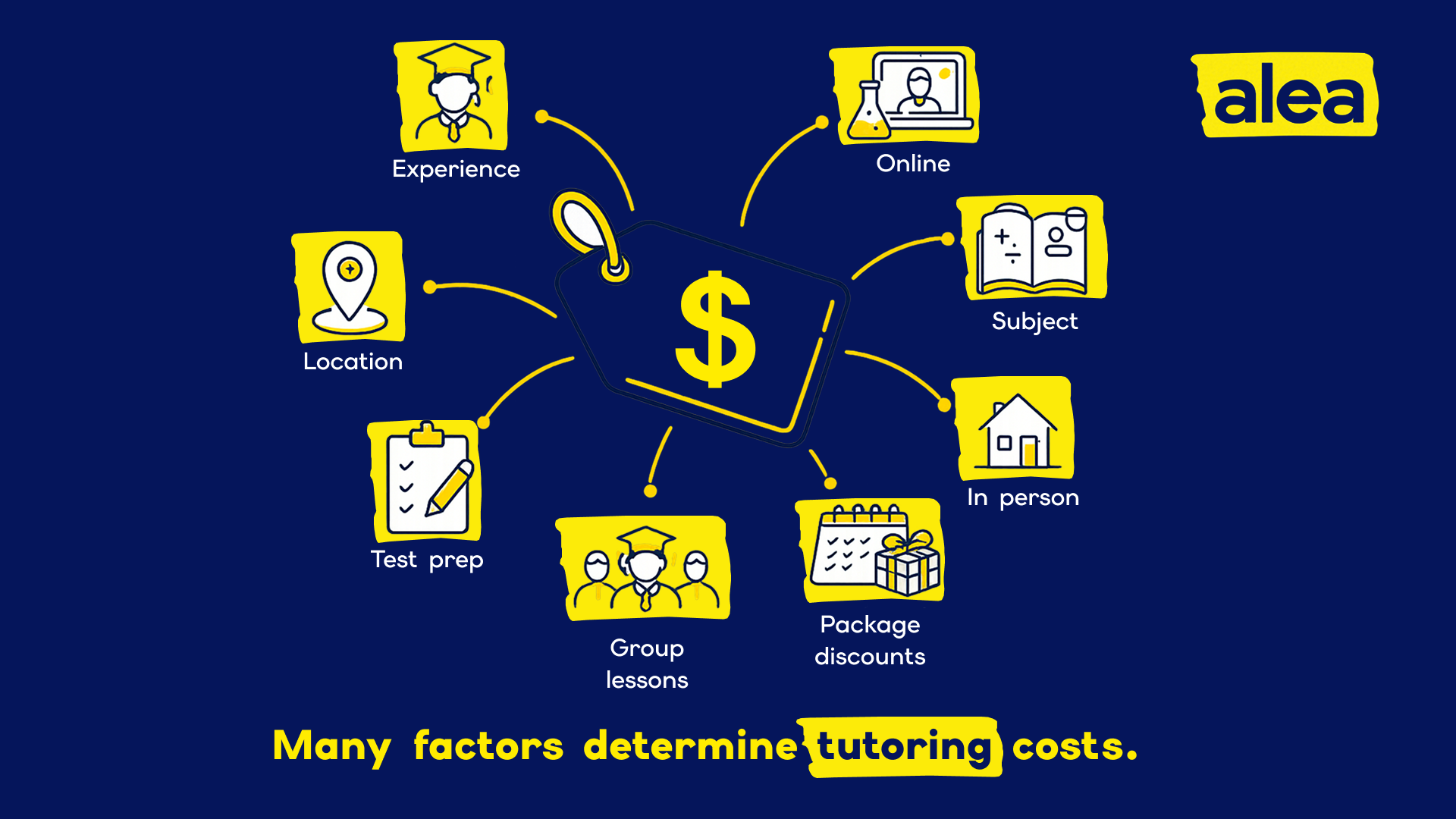
Short answer: most families pay somewhere between $25 and $80 an hour, but that range hides a lot, and the "it depends" answer you'll get from most tutoring sites isn't actually useless, it's just missing the specifics. Here's what actually drives the number up or down.
The baseline
For general K-12 subjects, online tutoring typically runs $27 to $55 an hour, and in-person sessions run $35 to $68 an hour. That in-person premium isn't arbitrary, it covers a tutor's travel time and the fact that in-home sessions usually take more of their day than a back-to-back online schedule would.
At the low end of these ranges you're often looking at a college student or a newer tutor, someone genuinely capable but without years of track record yet. At the high end, you're getting someone with real credentials or a strong reputation, someone who's built a practice around results, not just availability.
What pushes the price up
Subject matters more than people expect. Math, physics, and chemistry tend to run 15 to 30% higher than humanities subjects at a comparable experience level, mostly because there's more competition for tutors who are genuinely strong in those subjects and fewer people qualified to teach them well. AP and honors-level courses add another 20 to 40% on top of that, since the material is harder and the stakes (college admissions) are higher.
Test prep is its own category. SAT, ACT, and similar test prep tutoring typically runs $45 to $110 an hour, sometimes higher for specialists with a documented track record of score improvements. This is genuinely one of the more expensive corners of the tutoring world, because a good test prep tutor isn't just teaching the subject, they're teaching the test itself, which is a specific and marketable skill.
Experience and credentials are the biggest single factor. A college student tutoring on the side might charge $35 to $75 an hour. A tutor with a decade of classroom experience or a specific subject credential can charge meaningfully more, and elite specialists with a strong referral network and documented results can command $150 to $300+ an hour, occasionally higher for rare-language or highly specialized instruction.
Location still matters, even online. Tutors in high cost-of-living areas like New York or the Bay Area tend to charge more than tutors in smaller cities, and this shows up even in online tutoring to some degree, since a tutor's rate is often anchored to their own local cost of living.
What actually brings the price down
Package pricing is the most common discount, and it's usually real, not just a sales tactic. Booking a block of 10 or more sessions upfront can knock 5 to 15% off the effective hourly rate, since it guarantees the tutor a predictable schedule instead of one-off bookings that might cancel.
Group tutoring is the other lever. If your kid can be paired with one or two others at a similar level, per-student rates typically drop to 40 to 60% of the private rate, while the tutor's total hourly earnings actually go up, which is why a lot of tutors offer it. The tradeoff is obvious: less individual attention, which matters more for some kids than others depending on why they need help in the first place.
What this actually means for a family budgeting for it
If you're tutoring once a week for an hour, at a typical $45 to $60 rate, that's roughly $180 to $240 a month for general subjects, more if it's test prep or an AP-level course. Twice a week roughly doubles that. It adds up fast, which is exactly why most families end up tutoring reactively, a few sessions before a big test, rather than as an ongoing weekly habit, even when ongoing support would probably help more.
That reactive pattern is worth being honest about. A lot of academic struggles build slowly over weeks, not the three days before a test, and the cost of tutoring is a real part of why so many kids only get help once things have already gotten hard.
Built around youyou, not the curriculum.
Start with a free placement and feel the difference a tutor that adapts to you actually makes.