Signs Your Child Needs Extra Help in Math
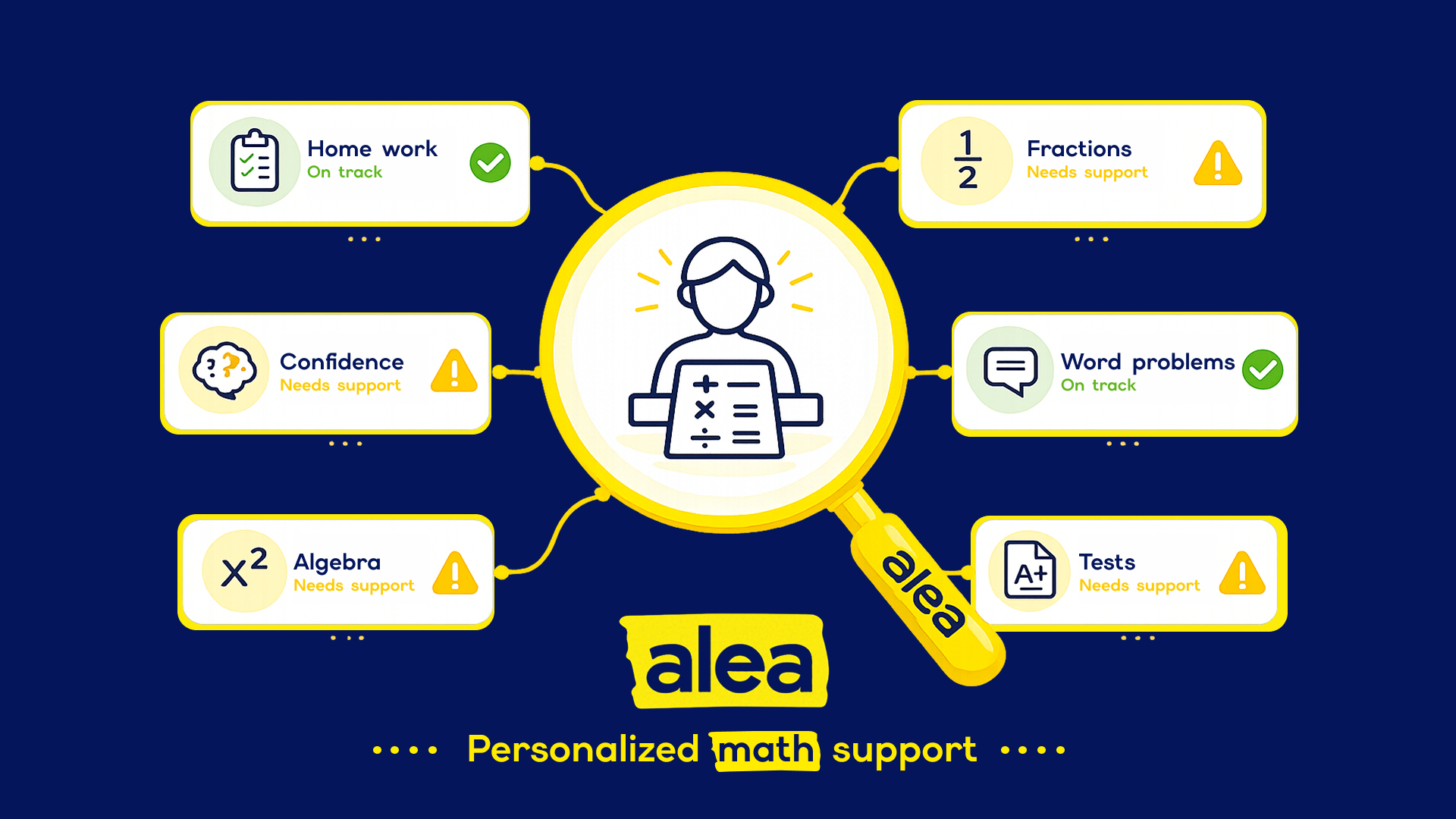
Every kid struggles with math sometimes. That's normal and it's not a sign of anything wrong. The harder question most parents actually have is different: is this a normal rough patch, or is my kid actually falling behind in a way that needs real intervention? Here's how to tell the difference.
The signs that actually matter
They can get the right answer but can't explain how. This is one of the more reliable signs and one of the easiest to miss, because on the surface the homework looks fine, the answers are correct. But if you ask "how did you get that" and your kid shrugs or gives a vague answer, they may be pattern matching rather than understanding. That works for a while and then falls apart hard when the material gets more complex and the old patterns stop applying.
Homework time has gotten dramatically longer. If a worksheet that used to take 20 minutes is now taking an hour, with a lot of stopping and starting, that's usually not laziness or distraction. It's much more often a sign that the underlying concept isn't solid, so every problem is being solved from scratch instead of through any real fluency.
They avoid math homework specifically, more than other subjects. Kids procrastinate on all kinds of homework, but if math in particular gets pushed to the very last minute, or triggers a level of resistance that other subjects don't, that's worth paying attention to. Avoidance is often a cover for "I don't actually know how to do this and I don't want anyone to find out."
Grades are dropping on tests specifically, not classwork. This one is subtle. A kid can do fine on homework, where they have time, help, and sometimes each other, and still be genuinely stuck when it's just them and a timed test. If test scores are consistently lower than what their daily work would suggest, that gap is worth investigating rather than writing off as test anxiety alone, since the two often travel together.
They've started saying "I'm just not a math person." This is less a math problem and more a confidence problem, but it matters just as much, sometimes more. Once a kid decides they're fundamentally bad at a subject, they tend to stop trying as hard, which makes the gap widen, which reinforces the belief. It becomes self-fulfilling if nobody interrupts it.
A concept from a previous grade still hasn't clicked. Math is unusually stacked compared to other subjects. If a kid never fully got comfortable with fractions in fourth grade, that gap doesn't go away, it just quietly makes every fraction-adjacent topic in fifth, sixth, and seventh grade harder, often without anyone connecting the dots back to the original gap.
Physical or emotional reactions to math specifically. Stomachaches before a math test, tears over a math worksheet that wouldn't provoke the same reaction from a reading assignment, a level of dread that's specific to this one subject. That's math anxiety, and it's a real and well documented thing, not an exaggeration or an excuse.
What's probably not a sign of a real problem
A single bad test. A rough week. A concept that took a few tries to click, most kids need repetition, and needing it doesn't mean something is wrong. Comparing your kid to a sibling or a classmate who found something easier isn't a useful signal either, kids develop at different paces even within the same family.
It's also worth remembering that a kid can be strong in math overall and still hit a specific unit that's genuinely hard for them. Struggling with geometry doesn't mean they're bad at math, it might just mean geometry is the one topic that doesn't click as naturally for how they think. That's different from a broad pattern across multiple topics and multiple months.
What to actually do about it
Start with their teacher. Teachers see a kid's work every day and usually have a much clearer read on whether something is a normal bump or an actual gap than a single homework session at home can tell you. Ask specifically: is this test-taking, understanding, or something from an earlier grade catching up with them. That question tends to get a more useful answer than "how's my kid doing."
If it turns out to be a specific, identifiable gap, the fix is usually more targeted than "more math practice" broadly. A kid stuck on fractions doesn't need more algebra practice, they need fraction practice, specifically, until that one thing clicks. Untangling exactly where the gap is matters more than the total number of hours spent on math.
And if the issue looks more like anxiety or a "I'm not a math person" story than an actual knowledge gap, that's worth addressing directly too, sometimes before the academic piece, since a kid who's convinced they can't do it will resist help even when it's exactly what they need.
Built around youyou, not the curriculum.
Start with a free placement and feel the difference a tutor that adapts to you actually makes.